Explore the stops
Ine and Amanohashidate: the boathouse village on Ine Bay
See all 12 stops
The sandbar, its two viewpoints and Ine Bay, pin by pin
Choose a route, then tap a pin or stop for its note and a Google Maps link.
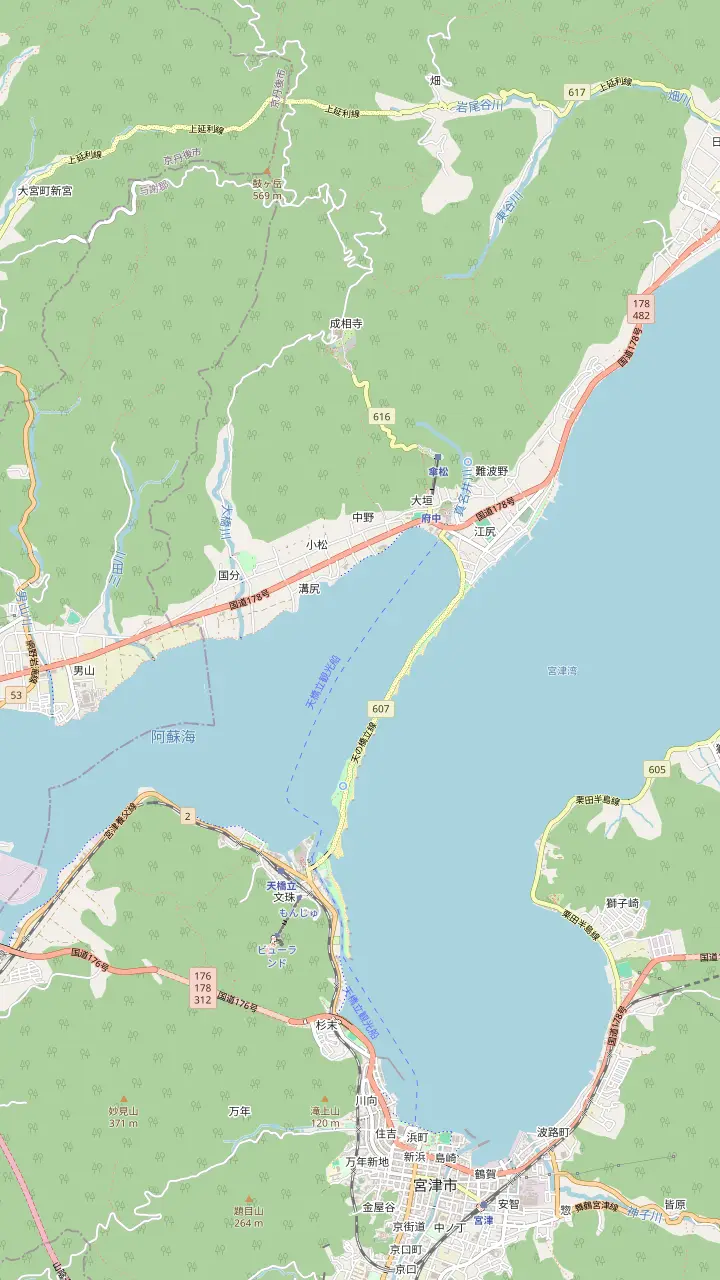
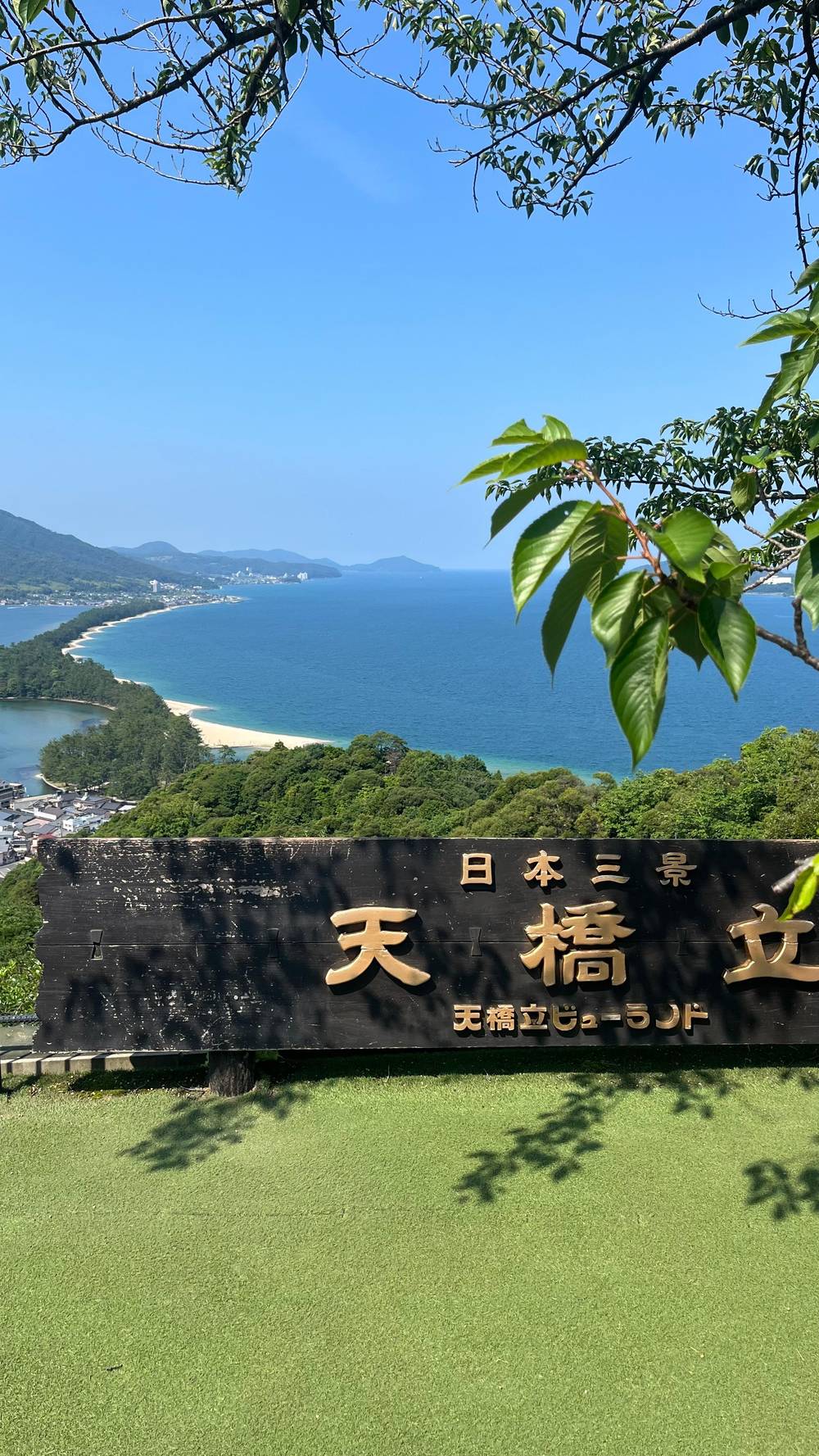
The sandbar is a 5 minute walk from the station on the Kyoto Tango Railway Miyatoyo Line.
Google MapsThis is one of three temples in Japan dedicated to the Monju Bodhisattva, and it is a 5 minute walk from the station.
Google MapsViewland is a 7 minute walk from the station, and the ride up is 6 minutes by chair lift.
Google MapsThe road bridge swings 90 degrees to let ferries and barges pass.
Google MapsThe shrine sits on the sandbar, together with a freshwater well called Isoshimizu.
Google MapsThe shrine is a 5 minute walk from the north end of the sandbar and opens 7:30 AM to 4:30 PM.
Google MapsThe observation deck stands at an altitude of 130 meters.
Google MapsThe grounds light up with Japanese maples in red in autumn.
Google Maps
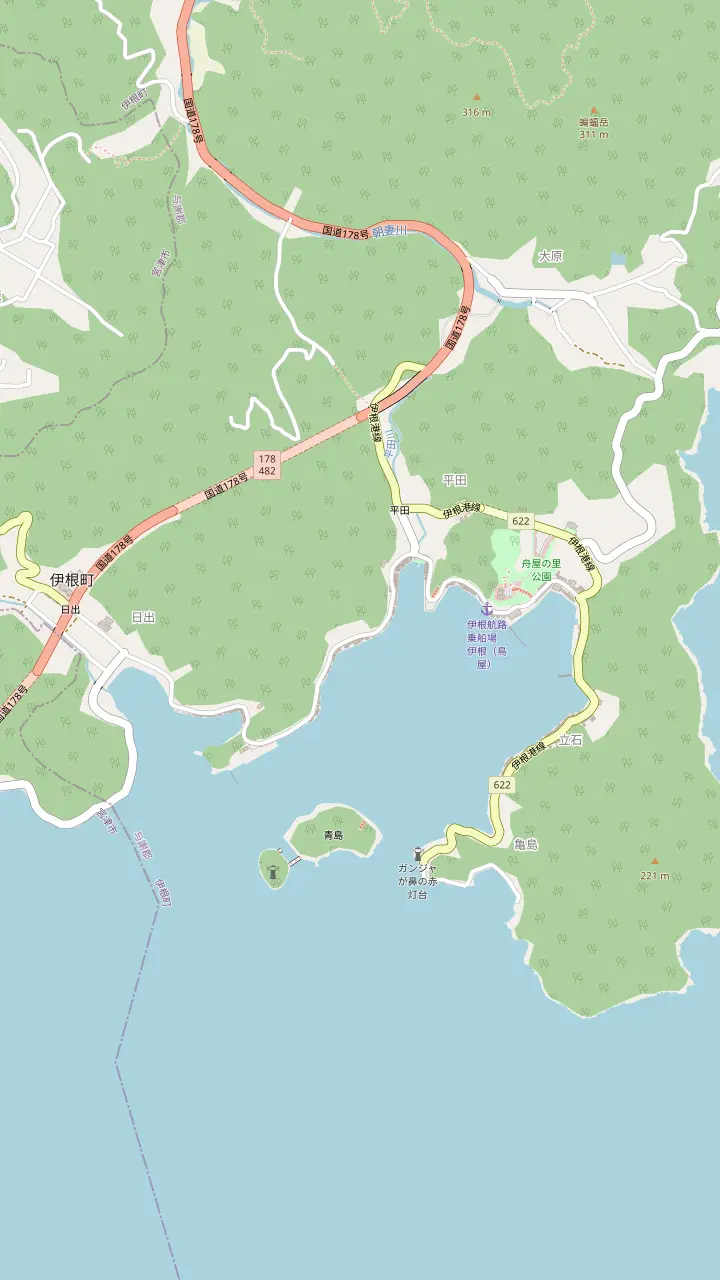
About 230 boat houses, called funaya, surround Ine Bay.
Google MapsThe roadside station beside it has free parking for 138 regular cars.
Google MapsThe roadside station perched above the village gives an aerial view of the boathouses.
Google MapsGuided tours such as the Ine Bay Cruise show the boathouses from the water.
Google Maps
Map data: © OpenStreetMap contributors
Ine is a fishing town of boathouses built over the water, a short trip north of the sandbar. This guide covers what the funaya are, how to reach them, the boats, the manners and the time a day tour allows.
Editorial team, amanohashidate.top · Updated November 6, 2026 · Allow 6 min
Key facts
- The housesAbout 230 boat houses, called funaya, surround Ine Bay.1
- Getting thereFrom Amanohashidate Station the Tankai bus to Ine takes approximately 60 minutes.2
- On the waterA sea taxi costs 1,000 yen per adult and carries a maximum of 12 passengers.3,4
- On the day tourThe itinerary gives Ine 1.5 hours, with the Ine Bay boat as an optional extra.
- PriceThe day tour from Kyoto or Osaka is from $52 per person.
What a funaya really is
Around the coast of Ine Bay stand about 230 boat houses, known in Japanese as funaya.1 They were built to lift fishermen's wooden boats out of the sea and protect them from rain, insects and rot.5 The ground floor held the boat, and the upper floor was where a fisherman kept his gear, such as nets.6 The prefecture's guide dates the boathouses to the Edo period, between 1603 and 1868.7
Seen from across the bay, the houses look as if they float. The prefecture's description explains the effect: the lower floor sits almost flush with the waterline, so the houses seem to float.8 The same page calls the boathouses a designated Group of Historic Buildings.9 Ine's tourist office takes a more modest line and says the funaya are not a historic site but a living place for fishermen and residents.10
That distinction shapes the visit. Today almost every boat is a larger fiberglass vessel, so locals moor in front of the funaya instead of inside them, although some smaller fishing boats are still stored in the boathouses.11 The ground floor can be used to cook, hang fish or squid to dry, and hang laundry.12 Many of the houses are now cafes, restaurants and inns, and some can be booked for an overnight stay.13
Getting there
Ways to reach Ine
| Way | Time | Note |
|---|---|---|
| Tankai bus from the station | About 60 minutes2 | Starts at Amanohashidate Station2 |
| Car from Miyazu | 45 minutes23 | National Route 17823 |
| Autumn express bus, 2025 | Daily in October and November24 | 1,000 yen to the driver25 |
| Day tour coach | 2.5 hours each way | Ine comes first on the itinerary |
The express bus was announced for 2025 only, so look for a notice before you count on it.24
A working village with house rules
Ine is a town of about 1,800 people, the second smallest population in Kyoto Prefecture.14 Many funaya are still private homes, and the prefecture asks visitors to be respectful as they wander.15 The town's tourist office goes further: visitors are asked not to enter a funaya without permission.10 A hanging net, a fishing basket or a door standing open is not an invitation.
Photography is the most common place for friction. The tourist office asks visitors to avoid taking pictures or videos of residents' daily life without permission.16 It also asks for quiet, particularly late at night and early in the morning, because fishermen go out at dawn.17 A visit on a day tour in daylight keeps you clear of those hours, but a night in an inn does not, so plan your evening accordingly.
The main road around the funaya is narrow enough that two cars cannot pass, and it is the only route for residents and the bus.18 Visitors are asked to park in the town-run lot, not on private land, and to take their trash back when they leave.19,20 None of this is difficult. Walk on the road edge, keep your voice down and treat the place as someone's neighborhood.
From the sandbar to the bay
Going from Amanohashidate to Ine by public transport is possible, but it is slow. The prefecture says the Tankai bus from Amanohashidate Station on the Kyoto Tango Railway Miyatoyo Line takes approximately 60 minutes to Ine.2 By car, it is 45 minutes north from Miyazu via National Route 178.23 Both figures are in addition to the journey from Kyoto or Osaka to Amanohashidate in the first place.
Ine's tourist office adds a full-journey view: Ine is about 2 hours by car from Kyoto city and 2 and a half hours from Osaka, and about 3 hours or 3 and a half hours respectively by train plus local bus.21,22 That is a long way for a day trip without a car. In October and November 2025 the Amanohashidate Tourism Association announced a tourist express bus running daily, with three boarding places in Miyazu and two stops in Ine, at a fare of 1,000 yen paid to the driver.24,25 Check whether it runs again before you count on it.
The tour sold on this site avoids the problem. Its coach ride is 2.5 hours each way, and Ine comes first among the stops, with 1.5 hours in the village. If you are weighing a coach tour against buses and a rental car, the days of the week matter as well as the distance, since a bus timetable that suits a weekday may not run on a weekend. Check the operator's schedule for your date.
Choose your Ine
How do you want to see the boathouses?
Pick the line that sounds like you; the reply sits beside it.
If I have a small group of up to about 5
Sea taxi
You can board without a same-day reservation.26
If I want the view from above
Roadside station
It sits above the village and shows the whole line of boathouses.27
If I only have one day and no car
Day tour coach
The coach ride is 2.5 hours each way and gives Ine 1.5 hours.
If I want to sleep over the water
Boathouse inn
Some funaya can be booked for an overnight stay.13
If I want a winter meal
Yellowtail shabu-shabu
The freshest, fattiest yellowtail is caught in winter.28
On the water: sea taxi and bay cruise
A boathouse makes most sense from the sea. The prefecture suggests a guided tour such as the Ine Bay Cruise, or a ride on a water taxi, to see the houses from the water.41 Ine's tourist office sets out the sea-taxi terms: 1,000 yen per adult and 500 yen for elementary school students, with under-sixes free, and a maximum of 12 passengers per boat.3,4
Small groups of up to about 5 people can board without a same-day reservation, and boarding near the Shichimenyama Parking Lot is the most convenient.26 One boat, Re:INE, charges 1,500 yen to adults at weekends and national holidays from September 2026.42 These are the fares the tourist office lists, and they can change, so look at the office's page for the date you plan to travel.
The day tour on this site lists an Ine Bay sightseeing boat of 30 minutes, Re:ine, as an optional extra at an additional fee. A guest from the recent reviews enjoyed feeding seagulls from that boat. If you are traveling independently and the bay is calm, a sea taxi gives you a more personal trip, while the bigger cruise suits a group that wants fixed departures.
The Ine stretch of the day
From coach door to the water
On the coach
Out from Kyoto or Osaka
The coach ride is 2.5 hours each way.
1.5 hours
Ine village
The itinerary lists a photo stop, a visit and free time in Ine.
Park stop
Funayanosato Park
Funayanosato Park and the observation point are on the stop list.
30 minutes
Ine Bay boat
The Re:ine sightseeing boat is optional and costs extra.
Leaving
Back on the coach
The coach leaves on time, so arrive early.
Eating, sleeping and looking down
Many of the boathouses have become cafes, restaurants and inns, and an overnight stay in one is possible.13 The food of the area is built around the bay. The prefecture lists yellowtail shabu-shabu as a local delicacy in Ine, and notes that the freshest, fattiest yellowtail is caught in winter.28
For a view of the whole village, the prefecture recommends heading up to the roadside station perched above it, which gives an aerial view of the boathouses.27 The roadside station Funaya no Sato Ine has free parking for 138 regular cars.40 On the day tour sold here, the itinerary lists Funayanosato Park and the Funaya no Sato observation point among its stops.
A reviewer on the tour noted that on a Wednesday most Ine shops were closed. That is worth holding in mind if your trip is on a midweek day: bring cash for any purchase, since most local shops may not accept cards, and do not plan a long lunch in the village on the strength of a map pin alone.
Video
Visiting a hidden fishing town in Kyoto: Ine no Funaya
travelgeek on YouTube · Until you tap play, no video is loaded.
The boathouses of Ine are a designated Group of Historic Buildings
In the village
House rules and carry-ons
Village manners4
For the day3
- Cash, since most local shops may not take cards
- Arrive 10 to 15 minutes early for the coach
- Sea taxi fare of 1,000 yen per adult3
How much time a day tour gives you
The coach trip sold on this site gives Ine 1.5 hours, with a photo stop, a visit, free time and sightseeing, plus stops at Funayanosato Park and the Funaya no Sato observation point. The Ine Bay boat, 30 minutes long, is an optional extra. That is enough to walk the waterfront, take the boat and look down from the observation point, but not enough for a funaya cafe lunch and an unhurried stroll.
Guests aged 70 and over sign a waiver on arrival, and the coach leaves on time, so arrive 10 to 15 minutes early at the meeting point. The itinerary can change or shorten because of weather, traffic or closures, so the Ine hour can lose ground if the road is slow. A rainy Ine is still atmospheric.
If you want more than 1.5 hours here, plan a night. Boathouse inns exist, and the prefecture's model course spreads Amanohashidate and Ine over 2 days.13,43 For a first visit, the day tour is the simple choice. For a return trip, stay over.
FAQ
Fast, clear answers, short.
How many funaya are there in Ine?
Ine's tourist office says they surround the coast of Ine Bay.1
How long does the bus from Amanohashidate take?
The Tankai bus from Amanohashidate Station takes approximately 60 minutes to Ine.2
How much is the Ine sea taxi?
It is 500 yen for elementary school students, and under-sixes ride free.3
Can I go inside a funaya?
Ine's tourist office asks visitors not to enter a funaya without permission.10
Can I stay in a boathouse?
The prefecture says some can be booked for an overnight stay.13
How long does the day tour spend in Ine?
The itinerary also lists an optional 30 minute Ine Bay boat at an extra fee.
Sources
- Ine Tourist Information (Ine Town Tourism Association) · About Funaya ↩
- Kyoto Prefecture tourism (Another Kyoto Official Travel Guide) · Ine Boathouses (Funaya) ↩
- Ine Tourist Information (Ine Town Tourism Association) · Small boat (Sea Taxi) ↩
- Ine Tourist Information (Ine Town Tourism Association) · Small boat (Sea Taxi) ↩
- Ine Tourist Information (Ine Town Tourism Association) · About Funaya ↩
- Ine Tourist Information (Ine Town Tourism Association) · About Funaya ↩
- Kyoto Prefecture tourism (Another Kyoto Official Travel Guide) · Ine Boathouses (Funaya) ↩
- Kyoto Prefecture tourism (Another Kyoto Official Travel Guide) · Ine Boathouses (Funaya) ↩
- Kyoto Prefecture tourism (Another Kyoto Official Travel Guide) · Ine Boathouses (Funaya) ↩
- Ine Tourist Information (Ine Town Tourism Association) · To Ine’s visitors ↩
- Ine Tourist Information (Ine Town Tourism Association) · About Funaya ↩
- Ine Tourist Information (Ine Town Tourism Association) · About Funaya ↩
- Kyoto Prefecture tourism (Another Kyoto Official Travel Guide) · Ine Boathouses (Funaya) ↩
- Ine Tourist Information (Ine Town Tourism Association) · To Ine’s visitors ↩
- Kyoto Prefecture tourism (Another Kyoto Official Travel Guide) · Ine Boathouses (Funaya) ↩
- Ine Tourist Information (Ine Town Tourism Association) · To Ine’s visitors ↩
- Ine Tourist Information (Ine Town Tourism Association) · To Ine’s visitors ↩
- Ine Tourist Information (Ine Town Tourism Association) · To Ine’s visitors ↩
- Ine Tourist Information (Ine Town Tourism Association) · To Ine’s visitors ↩
- Ine Tourist Information (Ine Town Tourism Association) · To Ine’s visitors ↩
- Ine Tourist Information (Ine Town Tourism Association) · Access to Ine town ↩
- Ine Tourist Information (Ine Town Tourism Association) · Access to Ine town ↩
- Kyoto Prefecture tourism (Another Kyoto Official Travel Guide) · Ine Boathouses (Funaya) ↩
- Amanohashidate Tourism Association · Miyazu/Amanohashidate to Ine town Express bus ↩
- Amanohashidate Tourism Association · Miyazu/Amanohashidate to Ine town Express bus ↩
- Ine Tourist Information (Ine Town Tourism Association) · Small boat (Sea Taxi) ↩
- Kyoto Prefecture tourism (Another Kyoto Official Travel Guide) · Ine Boathouses (Funaya) ↩
- Kyoto Prefecture tourism (Another Kyoto Official Travel Guide) · A Different Side of Kyoto: 8 Local Dishes That Shouldn’t Be Missed ↩
- Kyoto Prefecture tourism (Another Kyoto Official Travel Guide) · Amanohashidate
- Amanohashidate Tourism Association · Chionji Temple
- Amanohashidate Tourism Association · Chionji Temple
- Kyoto Prefecture tourism (Another Kyoto Official Travel Guide) · Amanohashidate Viewland
- Amanohashidate Tourism Association · Amanohashidate View Land
- Kyoto Prefecture tourism (Another Kyoto Official Travel Guide) · Amanohashidate
- Kyoto Prefecture tourism (Another Kyoto Official Travel Guide) · Amanohashidate
- Kyoto Prefecture tourism (Another Kyoto Official Travel Guide) · Motoise Kono Shrine
- Kyoto Prefecture tourism (Another Kyoto Official Travel Guide) · Motoise Kono Shrine
- Kyoto Prefecture tourism (Another Kyoto Official Travel Guide) · See Kyoto’s Seaside! A Day Trip Itinerary for Stunning Views in Amanohashidate
- Amanohashidate Tourism Association · Nariaiji Temple
- Kyoto Prefecture tourism (Another Kyoto Official Travel Guide) · Ine Boathouses (Funaya) ↩
- Kyoto Prefecture tourism (Another Kyoto Official Travel Guide) · Ine Boathouses (Funaya) ↩
- Ine Tourist Information (Ine Town Tourism Association) · Small boat (Sea Taxi) ↩
- Kyoto Prefecture tourism (Another Kyoto Official Travel Guide) · Amanohashidate/Ine 2-Day Standard Course ↩
Related reading