Clickable chart
Amanohashidate winter, spring, summer and autumn: when to go
Fast answer
Amanohashidate suits spring through fall for stable weather, while winter brings deep snow on the coast and Matsuba crab from November 6 to the end of March.
Seasons and snow
Daylight against the seasons
Twelve months of light on the sandbar
Choose a month to compare sunset, day length and the usual warmth at Maizuru, plus what the month brings to the coast.
Sunset
Jan
- Sunset at roughly 17:08
- Daylight lasts about 10 h2
- What the month holds: Crab season, deep snow possible4
- Days reach about 7°C, nights drop to about 0°C2
Deep snowfalls blanket the Sea of Japan coast in winter.10
Feb
Mar
- Sunset at roughly 18:06
- Daylight lasts about 11.9 h2
- What the month holds: Last month of the crab season4
- Days reach about 12°C, nights drop to about 2°C2
Matsuba crab dishes run until the end of March.4
Apr
- Sunset at roughly 18:31
- Daylight lasts about 13.1 h2
- What the month holds: Cherry blossoms at Nariai-ji4
- Days reach about 18°C, nights drop to about 7°C2
Nariai-ji has cherry blossoms and rhododendrons in spring.8
May
- Sunset at roughly 18:56
- Daylight lasts about 14 h2
- What the month holds: Beach flowers in bloom4
- Days reach about 23°C, nights drop to about 12°C2
Sweetbrier and beach morning glory bloom on the beach.3
Jun
Jul
- Sunset at roughly 19:16
- Daylight lasts about 14.4 h2
- What the month holds: Swimming opens in mid-July4
- Days reach about 30°C, nights drop to about 21°C2
The beach usually opens for swimming in mid-July.3
Aug
- Sunset at roughly 18:50
- Daylight lasts about 13.5 h2
- What the month holds: Hot, with long lift hours4
- Days reach about 32°C, nights drop to about 23°C2
The Kasamatsu Park cable car runs until 6:00 PM from July 20 to August 20.15
Sep
Oct
- Sunset at roughly 17:25
- Daylight lasts about 11.3 h2
- What the month holds: Mild days, maples ahead4
- Days reach about 22°C, nights drop to about 11°C2
Japanese maples turn red at Nariai-ji in autumn.8
Nov
- Sunset at roughly 16:54
- Daylight lasts about 10.3 h2
- What the month holds: Crab season opens on the 6th4
- Days reach about 16°C, nights drop to about 6°C2
Matsuba crab dishes are served from November 6.4
Dec
Sunset is worked out for the 15th of each month on Japan time. Day length and temperatures: NOAA averages for the Maizuru station, 18.5 km from the sandbar, 1971 to 2020.
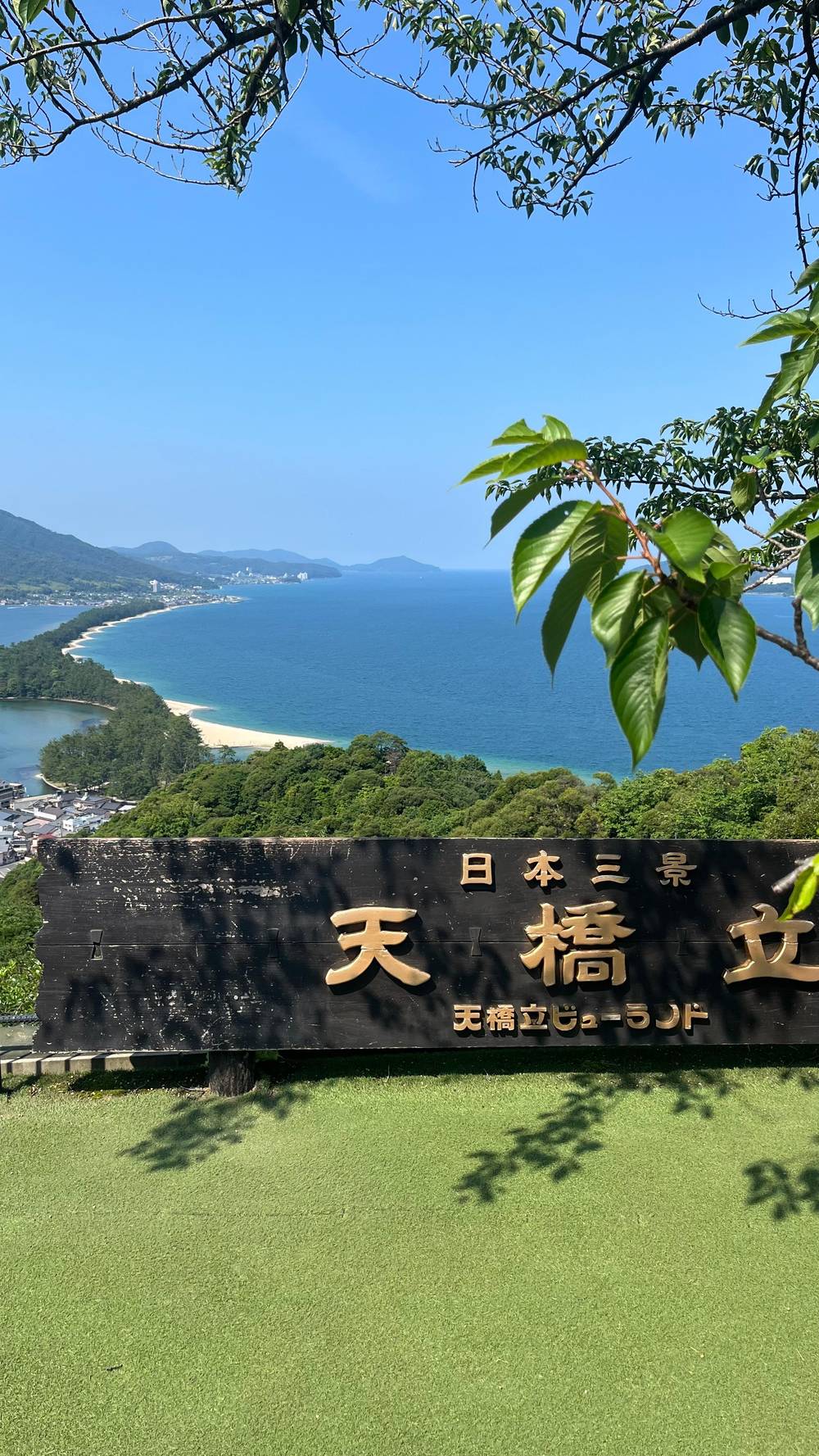
The sandbar changes with the season: snow and crab in winter, flowers in spring, swimming in summer and maples in autumn. Here is what the climate record and the official sources say, month by month.
Editorial team, amanohashidate.top · Updated November 6, 2026 · Allow 6 min
Key facts
- Steadiest weatherKyoto Prefecture says spring through fall has the most stable weather for sightseeing.1
- WinterIn January the nearest NOAA station, Maizuru, averages a high of 7.4 °C and a low of -0.2 °C.2
- SwimmingThe beach near Chion-ji usually opens for swimming in mid-July.3
- CrabMatsuba crab dishes are served from November 6 until the end of March.4
- PriceThe day tour is from $52 per person, with free cancellation up to 24 hours ahead.
What the climate record says
No weather station stands on the sandbar. The nearest in the NOAA record is the one at Maizuru, a port on the same Sea of Japan coast, and its figures are an approximation of conditions at the pines, not a measurement taken there. Treat them as a guide to the shape of the year and expect differences on the day.
On that record, August averages a daily high of 32.1 °C and a low of 22.7 °C.2 January averages a high of 7.4 °C and a low of -0.2 °C, and February has the same low of -0.2 °C.2,2 September brings 222 mm of precipitation, while April brings 122 mm.2,2
The sun is above the horizon for 14.5 hours in mid-June and for 9.8 hours in mid-December.2,2 That swing matters when a lookout sells its last winter ticket at 4:30 PM. December, for example, averages a high of 10.5 °C and a low of 1.9 °C, with 12 wet days and 132 mm of precipitation, so a short winter day can be both cold and damp.2 The prefecture-wide figures in the official climate page point the same way, with a summer average maximum of 30.3 °C and a winter average maximum of 9.7 °C.5,6
Winter: snow, crab and shorter days
Northern Kyoto's Sea of Japan coast gets deep snowfalls in winter that blanket everything with a covering of snow.10 The prefecture's day-trip guide lists the sight of Amanohashidate covered in snow among the reasons to come in winter, along with local seafood such as Matsuba crab.11 The NOAA record cannot say how much snow falls, but January averages 13 days with at least 2.5 mm of precipitation and 153 mm in the month.2
Crab is the winter draw. Matsuba snow crab dishes are served at ryokan and hotel restaurants in Kyotango and Maizuru from November 6 until the end of March.4 Taiza crab, landed at Kyotango's Taiza port, is fished by only five boats licensed for it, and the season also starts on November 6.12 In Ine, the freshest, fattiest yellowtail is caught in winter.13
Winter also trims the day. Viewland closes at 5:00 PM from November 16 to February 15, with the last ticket sold at 4:30 PM, and the Kasamatsu Park cable car stops at 5:00 PM in December and January.14,15 Lifts can pause for inspection or weather, so keep your plan flexible. Pack insulated layers, waterproof shoes and gloves for the sandbar, and remember that daylight is short: the sun is above the horizon for 10 hours in mid-January and 10.9 hours in mid-February.2,2
Month by month
Daylight and rain through the year
- Jan14.0 h
- Feb13.1 h
- Mar12.1 h
- Apr10.9 h
- May10.0 h
- Jun9.5 h
- Jul9.6 h
- Aug10.5 h
- Sep11.5 h
- Oct12.7 h
- Nov13.7 h
- Dec14.2 h
Months compared by sunless hours at mid-month and days with 2.5 mm or more of precipitation. NOAA station Maizuru, 18.5 km away, 1971 to 2020.2
Spring: flowers and cool evenings
In April the Maizuru record shows an average daily high of 18.5 °C and a low of 7.0 °C, with 122 mm of precipitation in the month.2 The prefecture's spring average maximum is 19.2 °C and its minimum 7.8 °C.16 March is cooler, with an average high of 11.9 °C and a low of 2.1 °C, and 11 wet days.2 By April the figures are comfortable walking temperatures, though the prefecture warns that in the north spring temperatures can still drop quite low once the sun goes down.18
Flowers set the spring calendar. Nariai-ji Temple has cherry blossoms and rhododendrons in spring, and the beach near Chion-ji is a flower spot in May, when sweetbrier and beach morning glory bloom.8,9 In May the Maizuru station shows an average high of 23.3 °C and 14 hours of sun above the horizon in mid-month.2
If you travel in April or May, bring a light jacket for the evening and a rain layer for the occasional wet day. The tour listing warns that its itinerary may change or shorten for weather, traffic or closures, and holiday and weekend traffic can delay the return.
Pick your season
Which time of year suits you?
Pick the line that matches you; the reply sits beside it.
If I want to swim
July or August
The beach usually opens for swimming in mid-July.3
If I want autumn color
October or November
Nariai-ji has red Japanese maples in autumn.8
If I want crab
Winter
Matsuba crab dishes are served from November 6 to the end of March.4
If I want stable weather
Spring to fall
The prefecture says those seasons have the most stable weather.1
If I want snow
January or February
The January low averages -0.2 °C at Maizuru.2
Summer: swimming and long evenings
The beach on the Monju side usually opens for swimming in mid-July, and the white sand beaches on the east side are where locals flock to swim in summer.3,20 July at Maizuru averages a high of 30.5 °C and a low of 21.4 °C, and August is hotter at 32.1 °C and 22.7 °C.2,2 The sea and the pine shade make the sandbar a pleasant place at midday.
Opening hours stretch with the light. The Kasamatsu Park cable car runs until 18:00 from March to October.15 The Maizuru record shows 14.5 hours of sun above the horizon in mid-June and 14.4 in mid-July.2,2 June brings 172 mm of precipitation.2
Heat is the constraint. Bring water, a hat and sun protection, and plan the sandbar walk early or late. The prefecture's guide calls Kyoto summers famously steamy, though the northern coast has sparkling clear beaches.21 On a coach tour you get a fixed window at each stop, so choose your shade and your swim time before you arrive.
The year at a glance
What each season brings
Nov to Mar
Crab season
Matsuba crab dishes are served from November 6 to the end of March.4
Late Jan
Lantern festival
Miyama's Snow Lantern Festival runs late January to early February.7
April and May
Blossom and beach flowers
Nariai-ji has cherry blossoms, and the beach flowers in May.8,9
Mid-July
Swimming opens
The beach near Chion-ji usually opens for swimming.3
Autumn
Red maples
Nariai-ji lights up with Japanese maples in red.8
October and autumn colors
Amanohashidate in October is mild: the Maizuru record shows an average daily high of 21.6 °C and a low of 11.4 °C, with 9 days of at least 2.5 mm of precipitation and 169 mm in the month.2 The prefecture-wide autumn average maximum is 20.4 °C and the minimum 12.8 °C.17 Those are pleasant temperatures for the sandbar walk and the climb up Mt. Monju, and the days are shorter than in summer: 11.3 hours of sun above the horizon in mid-October against 14.4 in mid-July.2,2
The colors are at Nariai-ji Temple, where Japanese maples set the grounds alight in a blaze of red in autumn.8 The prefecture's day-trip guide says the contrast of red leaves with the ocean is a highlight of fall, and rates spring through fall as the period with the most stable weather.1 November is cooler: the Maizuru station averages 15.9 °C at its high and 6.3 °C at its low.2
September deserves a warning. The Maizuru record shows 222 mm of precipitation and 10 wet days.2 Autumn also brings the start of the crab season on November 6.4 If you are planning an October trip, book a flexible ticket and keep an afternoon free for rain.
Video
Amanohashidate winter day trip, Kyoto by the Sea
Issanjing on YouTube · Until you tap play, no video is loaded.
In the winter, deep snowfalls blanket everything with a covering of snow
Pack for the month
A seasonal checklist
Does it snow, and what that does to a tour
Yes. The prefecture says deep snowfalls blanket the Sea of Japan coast in winter, and a dusting of snow on the roofs of temples or traditional thatched homes is possible in parts of the prefecture.10,22 With January and February both averaging a low of -0.2 °C, the record leaves room for frost and snow on the coldest mornings.2,2
A snowy day changes the practical side. Lifts and cable cars may pause for inspection or weather, roads to Ine and Miyama can slow down, and the tour listing says the itinerary can change or shorten for weather, traffic or closures. The cancellation terms are generous: the listing offers free cancellation up to 24 hours before for a full refund.
The prefecture's guide says winter has the sight of Amanohashidate covered in snow and the Matsuba crab season.11 At Miyama, the Snow Lantern Festival runs in late January and early February.7
FAQ
Fast, clear answers, short.
Does it snow in Amanohashidate?
The prefecture says deep snowfalls blanket the Sea of Japan coast.10
What is Amanohashidate like in October?
The Maizuru record shows a high of 21.6 °C and a low of 11.4 °C.2
When is the swimming season?
The Monju side beach usually opens for swimming then.3
When does the crab season start?
Matsuba crab dishes are served until the end of March.4
How cold is January?
The Maizuru record shows a low of -0.2 °C.2
How wet is September?
The Maizuru record shows 10 wet days in that month.2
Which station is the climate record from?
It is the nearest NOAA station, so use it as a guide, not an exact reading.
Sources
- Kyoto Prefecture tourism (Another Kyoto Official Travel Guide) · See Kyoto’s Seaside! A Day Trip Itinerary for Stunning Views in Amanohashidate ↩
- NOAA · Global Summary of the Month, Station Maizuru, 18.5 km away (GHCN JA000047750), 1971 to 2020 ↩
- Amanohashidate Tourism Association · Amanohashidate Beach (Shotenkyo Side) ↩
- Kyoto Prefecture tourism (Another Kyoto Official Travel Guide) · A Different Side of Kyoto: 8 Local Dishes That Shouldn’t Be Missed ↩
- Kyoto Prefecture tourism (Another Kyoto Official Travel Guide) · Seasons & Climate in Kyoto ↩
- Kyoto Prefecture tourism (Another Kyoto Official Travel Guide) · Seasons & Climate in Kyoto ↩
- Kyoto Prefecture tourism (Another Kyoto Official Travel Guide) · Snow Lantern Festival in Miyama’s Thatched Village ↩
- Amanohashidate Tourism Association · Nariaiji Temple ↩
- Amanohashidate Tourism Association · Amanohashidate Beach (Shotenkyo Side) ↩
- Kyoto Prefecture tourism (Another Kyoto Official Travel Guide) · Luxury Winter Train Trips in Kyoto by the Sea ↩
- Kyoto Prefecture tourism (Another Kyoto Official Travel Guide) · See Kyoto’s Seaside! A Day Trip Itinerary for Stunning Views in Amanohashidate ↩
- Japan National Tourism Organization · Taiza Crab: Kyotango’s Specialty ↩
- Kyoto Prefecture tourism (Another Kyoto Official Travel Guide) · A Different Side of Kyoto: 8 Local Dishes That Shouldn’t Be Missed ↩
- Amanohashidate View Land (official site) · Business information ↩
- Tango Kairiku Kotsu (bus operator official site) · Amanohashidate cable car and lift ↩
- Kyoto Prefecture tourism (Another Kyoto Official Travel Guide) · Seasons & Climate in Kyoto ↩
- Kyoto Prefecture tourism (Another Kyoto Official Travel Guide) · Seasons & Climate in Kyoto ↩
- Kyoto Prefecture tourism (Another Kyoto Official Travel Guide) · Seasons & Climate in Kyoto ↩
- Kyoto Prefecture tourism (Another Kyoto Official Travel Guide) · Amanohashidate ↩
- Japan National Tourism Organization · Amanohashidate Sandbar ↩
- Kyoto Prefecture tourism (Another Kyoto Official Travel Guide) · Seasons & Climate in Kyoto ↩
- Kyoto Prefecture tourism (Another Kyoto Official Travel Guide) · Seasons & Climate in Kyoto ↩
Related reading